
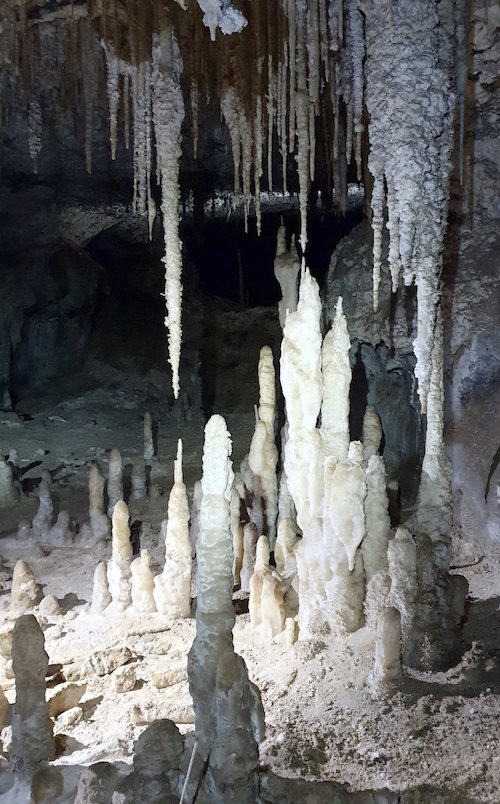
Caves are tough. They’ve been forming for thousands — sometimes millions — of years. But they’re also ridiculously easy to damage. One misplaced boot, one muddy handprint, one snapped formation… and that “small mistake” can outlast all of us.
At Action Stash, we’re big on getting underground, pushing yourself, dragging tackle bags through questionable squeezes — but we’re equally big on leaving caves looking like we were never there.
Why conservation matters
Caves don’t bounce back like forests. There’s no “give it ten years and it’ll recover.” A broken stalactite can represent thousands of years of growth. Mud on calcite can stain permanently. Trampled sediments can erase archaeology and fragile ecosystems.
So conservation isn’t about being preachy — it’s basic respect for something rare.
Practical steps to limit your impact
1) Stick to established routes
If there’s a clear path, use it. If there are taped routes (more on that below), stay within them. Avoid wandering across untouched sediment floors or brushing past formations.
2) Watch your hands (and knees)
Formations can be stained by oils from skin, plus mud transferred from gloves and oversuits. If you don’t need to grab it, don’t. Good movement underground is conservation in action.
Gear that helps you move cleanly and predictably (especially on crawls) makes a real difference: caving kneepads.
3) Keep your gear clean between caves
Mud transfer can move spores and microbes between cave systems. Cleaning kit and footwear between trips isn’t glamorous, but it’s one of the simplest ways to reduce ecological contamination.
4) Don’t touch formations
Yes, they look cool. No, you don’t need to stroke them. Even small contact can stop active growth. Calcite doesn’t love fingerprints.
5) Pack in, pack out
This should go without saying. Food wrappers, tape, broken bits of kit — if it came in with you, it leaves with you. (Including the tiny “it’s basically nothing” bits.)
6) Respect access agreements
Some caves have seasonal restrictions (often for bats). Others require permission or a leader. Following access rules keeps caves open. Ignoring them closes caves for everyone.

What happens when a cave is newly discovered?
When a new cave or passage is found, conservation planning often starts immediately — before increased traffic turns “pristine” into “polished”.
1) Documentation first
Before lots of trips happen, explorers will often photograph key areas, record notable features, and create (or update) a cave survey. This creates a baseline record of what the cave looked like before heavy use.
2) Taping routes
One of the most common measures is taping: marker tapes define a “corridor” to travel within. The idea is simple: stay between the lines. It concentrates foot traffic, protecting untouched floor and formations on either side.
3) Access control
Sometimes a cave may be temporarily closed, gated, or managed via permits. That’s not about exclusivity — it’s about preventing uncontrolled traffic before a conservation approach is in place.
4) Specialist input
If there’s rare wildlife, archaeology, or unusual formations, specialists may advise on how (or whether) the cave should be visited. Sometimes the most responsible option is limited access.
Conservation and good technique go together
Efficient cavers often make better conservationists: careful foot placement, controlled movement, tidy ropework, calm progression. Less flailing = less contact with walls, floor, and formations.